
Industrial Pulse-Jet Baghouse Dust Collectors: Design, Components and Applications
Industrial pulse-jet baghouse dust collectors are designed to capture airborne dust generated during manufacturing and material handling. These systems use fabric filter bags and automatic pulse-jet cleaning to provide continuous dust filtration in a wide range of industrial applications.
Dust-laden air enters the collector housing and passes through the filter bags. In a typical outside-to-inside filtration arrangement, dust is retained on the outer surface of the bags while filtered air flows into the clean-air chamber and exits the system.
As dust accumulates, the pulse-jet cleaning system delivers short bursts of compressed air into the bags. The released dust falls into the hopper for discharge. Cleaning intervals and system settings are selected according to operating conditions.
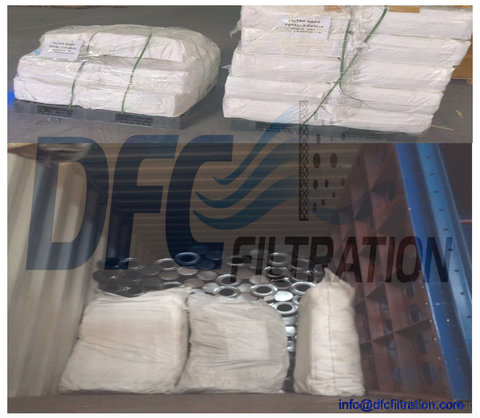
The filter bags are selected according to dust characteristics, process temperature and filtration requirements. Available needle-punched felt options may include polyester, PTFE, aramid, PPS and other application-specific materials. Media weights such as 550 g/m² and 750 g/m² are possible configurations, rather than fixed specifications for every system.
Support cages maintain the shape of the filter bags during filtration. Cage options include carbon steel, galvanized steel, and stainless steel, with dimensions and surface treatments, such as high-temperature silicone coating, selected to suit the application.
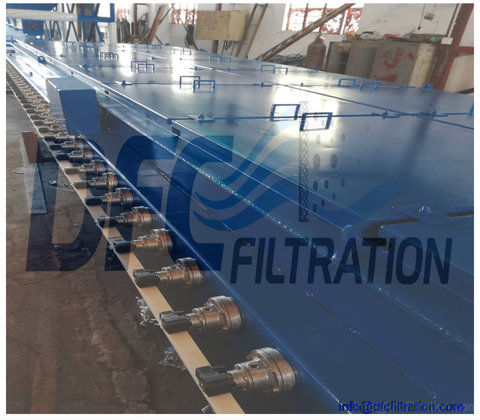
The cleaning system typically includes pulse valves, a compressed-air header, blow pipes and a controller. The collector also includes a dust hopper and a discharge arrangement selected for the collected material and project layout.
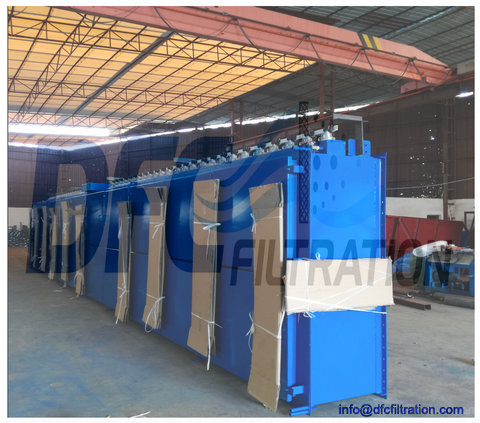
Baghouse systems can be designed for different airflow capacities. A capacity of approximately 50,000 m³/h is one possible project example; it is not a fixed rating for all equipment.
Final equipment dimensions, filtration area, number of filter bags, bag size, cleaning configuration and fan requirements depend on the actual airflow, dust loading, dust properties, temperature and target operating pressure drop.
Pulse-jet baghouse dust collectors are commonly used in cement and bulk material handling, metal processing, woodworking, mineral processing, chemical processing and other dust-generating industrial operations.
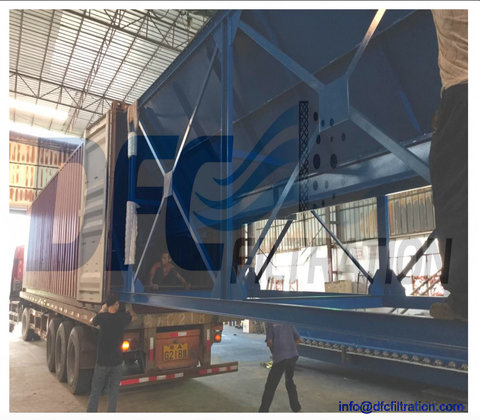
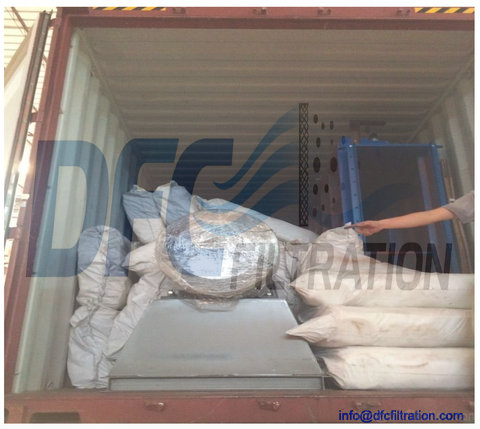
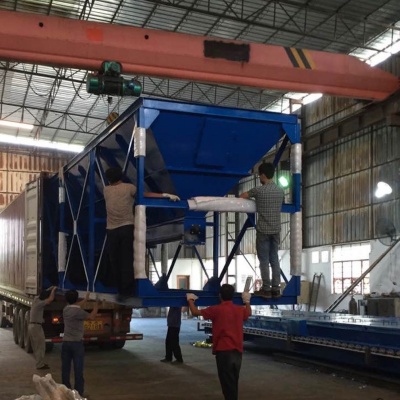
DFC Filtration supports complete industrial baghouse dust collection projects with customizable equipment configurations, filter media and support cages. The photographs in this article illustrate equipment fabrication, assembly and preparation for shipment.
Planning a baghouse dust collection project? Share your required airflow, dust type, operating temperature and installation conditions with DFC Filtration to discuss suitable equipment options.